Why Low MOQ Matters: EV Charging Station OEM Solutions for Startups and SMBs
SHENZHEN, GUANGDONG, CHINA, August 16, 2026 /EINPresswire.com/ -- The EV charging market is moving past the era of

Press Release Disclaimer: This is a press release distributed through the XPR Media network. It has not been independently verified by our newsroom.

SHENZHEN, GUANGDONG, CHINA, August 16, 2026 /EINPresswire.com/ — The EV charging market is moving past the era of dominance by a handful of legacy players. The door is opening to a wider range of participants — startups, emerging brands, and regional distributors are entering the space, each aiming to move lean: focusing their resources on brand building and market development while entrusting production to specialized manufacturing partners. For these new entrants, the most critical factor in OEM partnership terms is the project’s minimum order quantity.
Low-MOQ EV charging station OEM programs change this equation. By accommodating smaller initial batches while maintaining the same quality standards as high-volume production, these programs allow startups and SMBs to test product-market fit, build distribution channels, and scale production in phases — expanding output in step with business growth, rather than carrying heavy inventory from day one.
What Low MOQ Enables for Emerging EV Charging Brands
Low MOQ gives emerging EV charging brands flexible room to enter the market at a lower threshold. Three core values drive the journey from zero to one:
Market validation before inventory commitment — Test real demand in target markets with a small initial batch, confirm product-market fit before scaling procurement, and avoid locking limited capital into unvalidated stock.
Capital efficiency — Direct startup funding toward brand building, channel development, and customer acquisition rather than tying it up in large-order deposits and warehousing costs, maintaining healthy cash flow throughout the launch phase.
Flexibility for product iteration — Small-batch production allows brands to adjust specifications, packaging, or feature configurations based on early user feedback, optimizing the product in the next run without having to clear through a warehouse of outdated inventory.
Feyree’s low-MOQ EV charging station OEM program addresses all three of these startup-stage challenges with a complete launch framework: from small-batch trial production and brand customization through to phased volume scaling as market validation progresses, with production support and technical service matched to each growth stage.
The following breaks down how Feyree meets these challenges through the four stages of its OEM program structure.
Feyree’s OEM Program Structure
Feyree’s OEM project is structured around four stages, building a startup brand from concept to market delivery:
Stage 1 — Requirements analysis and feasibility assessment. The engineering team studies the startup’s market positioning, target market certification requirements, and budget parameters to assess viable solutions. Deliverable: an OEM project proposal with initial quotation.
Stage 2 — Design and engineering development. Industrial design, PCB engineering, firmware development, and enclosure prototyping are completed in-house (100 percent internal R&D). Deliverable: a design prototype for appearance confirmation.
Stage 3 — Certification and compliance preparation. Feyree coordinates all required third-party laboratory testing (CE, RoHS, FCC, UKCA) so the finished product arrives with the regulatory documentation for its target market. Deliverable: certification certificates and test reports.
Stage 4 — Production and delivery. Small-batch trial run for confirmation, full QC inspection before shipment, and phased volume scaling as demand grows. Deliverable: products with batch QC reports.
Throughout all four stages, Feyree coordinates third-party testing and manages brand customization covering hardware branding, mobile application interface, packaging design, and firmware configuration. The full product catalog is available at the Feyree product collection page as a reference for OEM discussions.
Stage 1 — Requirements Analysis and Feasibility Assessment
The OEM process begins with direct consultation between Feyree’s engineering team and the startup or SMB brand. During this stage, the team reviews the client’s product positioning, target market, budget parameters, and certification requirements. The minimum order quantity is determined at this stage, based on the product configuration and certification scope required for the target market. The deliverable is an OEM project proposal with an initial quotation, covering the engineering scope, certification plan, and production timeline. This stage ensures that both parties align on specifications and expectations before committing resources to design and development.
Stage 2 — Design and Engineering Development
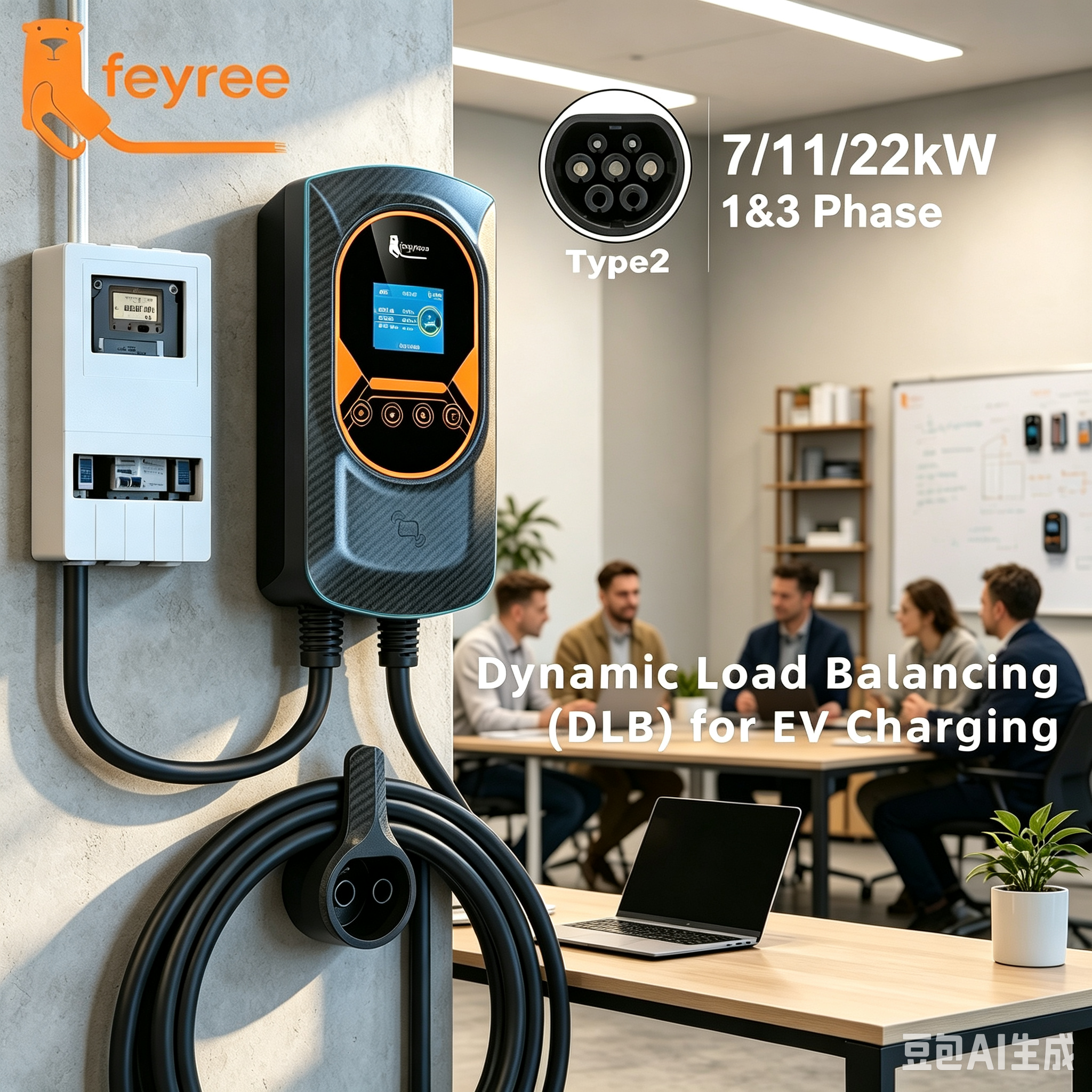
With a low MOQ in place, design and prototyping are managed entirely in-house by Feyree’s engineering team, covering industrial design (enclosure color, brand logo position, silkscreen layout), PCB engineering, firmware development with Tuya Smart or Smart Life application branding, and enclosure prototyping. The deliverable is a design prototype for appearance confirmation before tooling and production. ODM customization options available at this stage include hardware branding, packaging design, mobile application interface, firmware configuration, and documentation, all managed through a single project channel. The charger can be configured with Type 1, Type 2, NACS, or GB/T connectors to match the target market. Feyree’s product collection page is available at the Feyree product collection for reference.
Stage 3 — Certification and Compliance Preparation
During this stage, Feyree identifies the certification combination required for the target market and coordinates all third-party testing through accredited laboratories. The certification portfolio covers CE marking for the European Union’s Low Voltage Directive and EMC requirements, RoHS compliance for restricted hazardous substances, FCC approval for the United States market, and UKCA for the United Kingdom, alongside TÜV certification specifically for the high-durability charging cable assembly. The chargers integrate Type B residual current protection (AC 30 mA and DC 6 mA) and UL94 V-0 flame-retardant enclosure materials as standard. Wide voltage compatibility (single-phase 85 V to 264 V and three-phase 160 V to 450 V, supporting 50 Hz and 60 Hz) allows a single hardware configuration to serve multiple markets with connector changes. Certification documentation is issued by accredited third-party laboratories and available for buyer verification. More certification and product information is available at the official website.
Stage 4 — Production and Delivery
Production begins with a small-batch trial run to confirm that the output matches the approved prototype specifications. Each unit goes through automated SMT assembly lines, systematic aging tests simulating sustained load conditions, and final QC inspection before shipment. The charging cable assembly uses 99.95 percent pure copper conductors with TÜV-certified TPU insulation and silver-plated connector pins (5 micrometers coating). Products are backed by a two-year warranty covering core components. The same tooling, molds, and certification coverage apply across small-batch and volume production runs, allowing the brand to scale output without requalification costs. The production lead time is confirmed during project kickoff based on order specifications and the current production schedule.
For startups and SMBs selecting an EV charging station OEM partner, four indicators determine whether the partnership can support phased growth: MOQ flexibility matched to business stage, certification coverage for the target market, customization scope covering hardware and software, and the ability to scale from small batches to volume production without requalification. Feyree’s four-stage OEM program incorporates these indicators from the requirements analysis stage. Startups and SMBs are encouraged to review the full product catalog and submit OEM inquiries through the official website: https://www.feyree.com/.
FEYREE TECHNOLOGY LIMITED
FEYREE TECHNOLOGY LIMITED
+86 137 2432 5548
email us here
Visit us on social media:
YouTube
TikTok
X
Legal Disclaimer:
EIN Presswire provides this news content “as is” without warranty of any kind. We do not accept any responsibility or liability
for the accuracy, content, images, videos, licenses, completeness, legality, or reliability of the information contained in this
article. If you have any complaints or copyright issues related to this article, kindly contact the author above.

Media gallery