Americans are Rethinking Holiday Spending as Rising Costs Squeeze Budgets, Thrivent Survey Finds
MINNEAPOLIS, Oct. 28, 2026

Press Release Disclaimer: This is a press release distributed through the XPR Media network. It has not been independently verified by our newsroom.

Americans are Rethinking Holiday Spending as Rising Costs Squeeze Budgets, Thrivent Survey Finds
PR Newswire
MINNEAPOLIS, Oct. 28, 2026
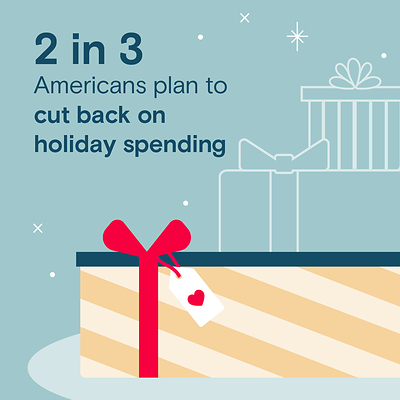
- Thrivent’s 2026 Holiday Spending Survey reveals 2 in 3 Americans plan to cut at least one holiday expense, while those trimming gift budgets are buying fewer gifts for fewer people.
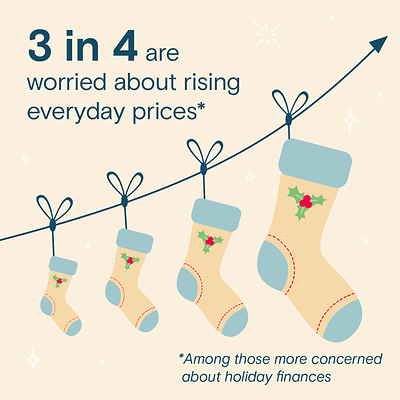
- Of Americans who are increasingly concerned about holiday finances, 75% point to general rising costs.
MINNEAPOLIS, Oct. 28, 2026 /PRNewswire/ — More than two thirds (68%) of Americans plan to cut back on at least one holiday expense this year as rising everyday costs put added pressure on household budgets, according to Thrivent’s 2026 Holiday Spending Survey. The findings show Americans are making difficult tradeoffs to celebrate the holidays while managing competing financial priorities.
“The holidays can bring pressure to show people we care through spending, but higher everyday costs are forcing many families to make difficult choices about what they can realistically afford,” said Thrivent Financial Advisor Alexander Newby. “The goal isn’t to spend your way to a meaningful holiday. Start with what you can afford, decide what matters most, and build a plan that takes both into account.”
Rising everyday costs are putting pressure on holiday budgets
More than half of Americans (52%) expect the current economic environment to affect their approach to holiday spending at least a fair amount. That pressure extends beyond the holidays, with 35% reporting they’ve reduced spending on essential items in the past 6-12 months.
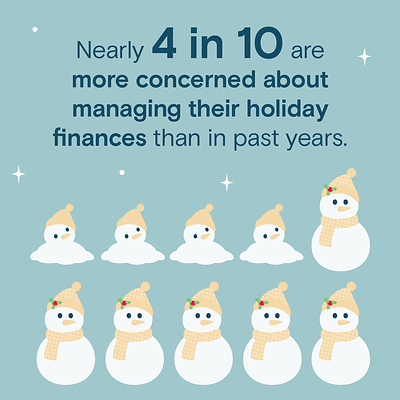
Nearly 4 in 10 (38%) say they are more concerned about managing their holiday finances than in past years. Among those who are more concerned, 75% point to the rising cost of everyday items. And nearly three in four (72%) Americans say inflation is negatively impacting their household finances heading into the holidays.
Americans plan to shrink gift lists and travel plans to fit tighter holiday budgets
More than two thirds of Americans (68%) plan to cut back in at least one area this holiday season because of current economic conditions. Dining out (44%), gifts for family and friends (32%) and travel (31%) are the primary areas where Americans plan to spend less.
While the overall share of Americans cutting back is consistent with 2025, more of those reducing their spending on gifts are buying fewer gifts and shopping for fewer people. Two thirds (66%) say they will purchase fewer gifts, up from 56% in 2025, while 46% plan to buy for fewer people, up from 37%. About half (51%) plan to purchase less expensive gifts.
Travel plans are also taking a hit. More than seven in ten (71%) say gas prices are negatively impacting their household finances, and among those who plan to cut back on travel, 60% say they do not plan to travel at all during the holidays, up from 56% in 2025.
Three ways to spend more intentionally this holiday season
Thrivent Financial Advisor Alexander Newby recommends three steps to help people manage holiday expenses while staying focused on what they value most:
- Begin with the resources you have available. Before shopping or booking travel, review your current expenses, existing debt and other financial priorities. Set a realistic holiday spending limit based on what you can afford today, rather than what you spent last year or feel expected to spend.
- Decide what matters most. Make room for the people, traditions and experiences that mean the most to you. If your budget cannot accommodate everything, consider purchasing fewer gifts, setting limits for gift exchanges or replacing some purchases with shared experiences, handmade gifts or acts of service.
- Don’t sacrifice long-term stability for momentary magic. Keep a running total as you shop. If spending begins to move beyond your plan, adjust before turning to credit cards or pulling money away from longer-term priorities, such as retirement or savings.
To discuss the survey findings and advice from Thrivent Financial Advisor Alexander Newby please email Nathan.Dupont@thrivent.com or mediarelations@thrivent.com.
Media Contact
Nathan Dupont
nathan.dupont@thrivent.com
414-550-2204
About Thrivent
Thrivent is a Fortune 500 financial services company that helps build, grow and protect financial well-being through purpose-driven advice, investments, insurance, banking and generosity programs. Thrivent serves more than 2.4 million clients through thousands of financial advisors across the country and has more than $212 billion in assets under management/advisement (as of 12/31/25). Thrivent carries strong financial ratings from independent rating agencies – including AM Best, Moody’s and S&P Global Ratings – which demonstrate the company’s financial strength, stability and ability to pay claims. Ratings don’t apply to investment product performance and more information can be found on each rating agency’s website. For more information about Thrivent, visit Thrivent.com or find us on Facebook, Instagram and LinkedIn.
Thrivent is the marketing name for Thrivent Financial for Lutherans. Insurance products issued by Thrivent. Not available in all states. Securities and investment advisory services offered through Thrivent Investment Management Inc., a registered investment adviser, member FINRA and SIPC, and a subsidiary of Thrivent. Thrivent.com/disclosures.
About Ipsos
Ipsos is one of the largest market research and polling companies globally, operating in 90 markets and employing nearly 20,000 people. Its research professionals, analysts and scientists provide insights into the actions, opinions and motivations of citizens, consumers, patients, customers and employees.
Survey Methodology
This poll was conducted by Ipsos on behalf of Thrivent from Sept. 29 through Oct. 8, 2026, using the probability-based KnowledgePanel®. The poll is based on a nationally representative probability sample of 2,158 U.S. adults ages 18 and older. The margin of sampling error for the U.S. gen pop sample is plus or minus 2.2 percentage points at the 95% confidence level, for results based on the entire sample of adults. The margin of sampling error takes into account the design effect, which was 1.06.

 View original content to download multimedia:https://www.prnewswire.com/news-releases/americans-are-rethinking-holiday-spending-as-rising-costs-squeeze-budgets-thrivent-survey-finds-302920930.html
SOURCE Thrivent