
A Partnership for Reliable Hydrogen Tank Leak Detection
From application lab validation to integrated solution ASSLAR, GERMANY, October 19, 2026 /EINPresswire.com/ -- Hydrogen

Press Release Disclaimer: This is a press release distributed through the XPR Media network. It has not been independently verified by our newsroom.
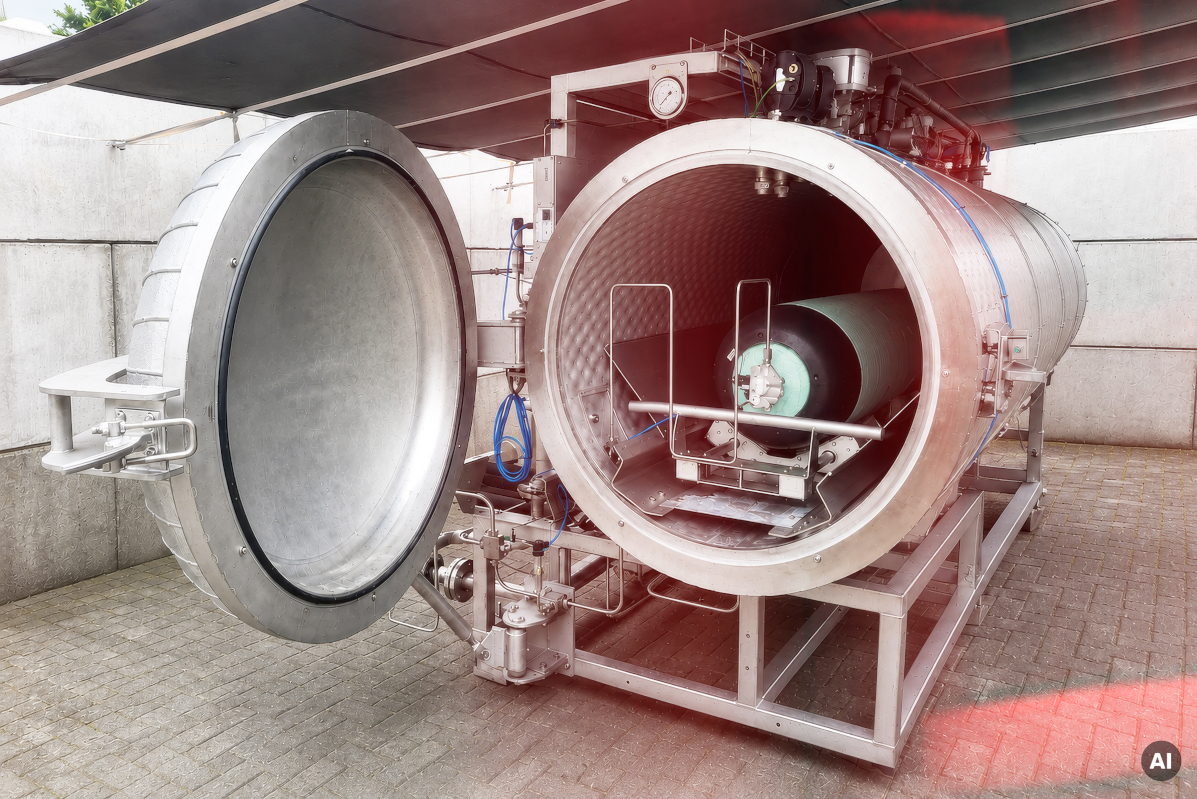

From application lab validation to integrated solution
ASSLAR, GERMANY, October 19, 2026 /EINPresswire.com/ — Hydrogen components must function safely under demanding conditions. Tanks, lines, valves and other components are subjected to mechanical, thermal and pressure-related loads as part of validation and approval testing. Leak testing is a key part of these test sequences. It verifies whether a component remains reliably tight after defined load cycles.
Resato High Pressure Technology is headquartered in Assen, the Netherlands, and employs 65 people. The company develops and builds high-pressure solutions for a large variety of markets and application areas, including the hydrogen sector. These hydrogen systems are used to test and validate tanks, components and hoses under realistic conditions. The challenge is not only to generate and control high pressures safely. Leak testing also has to be integrated reliably into the overall process and deliver reproducible results.
For a hydrogen gas test system used to validate hydrogen storage vessels, Resato was looking for a suitable leak detection solution. The requirements were demanding: the measurement technology had to be integrated into a complex high-pressure test environment, deliver stable results over longer measurement periods and comply with the safety-related framework of the system.
Feasibility study in the application laboratory
In order to identify the most suitable leak detector for long-term qualification processes in the hydrogen economy, Resato turned to Pfeiffer Vacuum+Fab Solutions. The project began with a feasibility study in the Application Laboratory of Pfeiffer in Asslar, Germany. Using Resato’s own test and calibration setup, the teams carried out measurements, evaluated the behavior of the system and assessed how the leak detection technology could later be integrated into the Resato test system.
By evaluating the application under realistic operating conditions, Resato and Pfeiffer gained insights that could not be derived from technical specifications alone. The focus included long-term stability, background signal behavior, temperature influences and practical integration into the test setup.
The feasibility study created a reliable basis for selecting the final solution. Especially in safety-relevant hydrogen applications, this kind of preliminary validation reduces technical uncertainty and helps avoid incorrect investment decisions. At the same time, Pfeiffer was able to understand the customer’s requirements in detail to design the solution for the specific application.
Two tracer gas leak detectors in the test system
Following the evaluation, Resato selected two ASM 340 tracer gas leak detectors. They were integrated into Resato’s high-pressure test solution for hydrogen applications, including the testing of hydrogen tanks for the automotive sector as well as components for the transport and storage of pure hydrogen.
During the test sequence, the tank is conditioned, pressurized and then subjected to permeation and leak testing. Depending on the tank size and customer-specific requirements, different test conditions must be covered. The tanks are pressurized and tested in a pressure range from 350 to 875 bar (35 to 87.5 MPa).
For safety reasons, the ASM 340 leak detectors were installed in a separate, protected area outside the ATEX zone. This spatial separation protects the measurement technology from the explosion-hazard area while still allowing seamless integration into the automated test process. Each leak detector is fully integrated into the overall testing process and the Resato HMI for easy control and automated operation. Communication with the system is handled via an RS-232 interface. The permeation and leak testing runs automatically, and the measurement data is transferred directly into the final test report for the customer. The ASM leak detectors are calibrated using an external calibrated hydrogen leak. This supports reliable measurement results under the specific conditions of the application.
Standards such as R134 and UN GTR No. 13-2 define the regulatory framework. Implementing these requirements in a reliable test system calls for the combined technical expertise of Resato and Pfeiffer: Resato provides the high-pressure system, test chambers and safety technology, while Pfeiffer contributes the leak detection technology and application-specific measurement support.
Integrated leak testing for demanding hydrogen applications
The decisive factor was the close cooperation between both parties in developing a solution that had not previously existed in this form. The application required more than selecting a suitable leak detector: leak testing had to become a reliable part of a high-pressure test, with demanding requirements for safety, automation and measurement stability. Through ongoing feasibility testing, Pfeiffer helped establish a reliable basis for the industrial solution and supported the final decision-making process.
Today, ASM 340 leak detectors support leak testing within the Resato test system. The detectors enable stable measurements over longer periods and can be safely integrated into the test sequence.
Support also continued after the sale. Resato received further assistance with measurement-related questions and the evaluation of test results, including how parameters such as temperature can affect leak-rate measurements. This is particularly important because measurement values in complex test systems must always be assessed in the context of the setup, environmental conditions, and test parameters.
“The cooperation with Pfeiffer Vacuum+Fab Solutions helped us identify the right solution for our application”, says Stefan Langeland, Mechanical Engineer at Resato. ”The combination of measurement technology, application expertise and continuous support was key to successfully integrating leak testing into our test system. This has led to an unprecedented method of testing and validating objects using pure hydrogen.”
A transferable concept for the hydrogen sector
The project shows that reliable leak testing in the hydrogen sector requires more than suitable equipment. Especially in approval and qualification testing, measurement technology must be understood in the context of the full test setup, environmental conditions and applicable test requirements. Otherwise, repeated testing can lead to additional costs, longer approval processes and delayed time to market.
An early feasibility study helps reduce this risk. It creates confidence before investment, makes technical interdependencies visible and supports the safe integration of leak testing into demanding hydrogen test systems. This applies not only to tank testing, but also to hose testing and component testing where high pressure, gas permeation and leak testing come together to meet testing requirements. For test system manufacturers, test laboratories and companies in the hydrogen sector, this provides a transferable concept for future applications: robust measurement technology, process understanding and application support combined in one reliable and efficient testing solution.
Dr Sandra Thirtle-Höck
Pfeiffer Vacuum+Fab Solutions
+49 64 418021460
Visit us on social media:
LinkedIn
YouTube
Legal Disclaimer:
EIN Presswire provides this news content “as is” without warranty of any kind. We do not accept any responsibility or liability
for the accuracy, content, images, videos, licenses, completeness, legality, or reliability of the information contained in this
article. If you have any complaints or copyright issues related to this article, kindly contact the author above.

Media gallery

