
Missouri Reports Nearly 600 Cases of Cyclospora Illness Amidst National Outbreak Investigation
Missouri has reported nearly 600 cases of cyclospora illness, a significant increase from previous years. The Centers for Disease Control and Prevention is investigating a nationwide outbreak, recently adding Illinois to its investigation which is linked to lettuce from Taylor…

 St. Louis, MO, July 27, 2026 —
Missouri has recorded close to 600 cases of cyclospora illness, marking a substantial rise compared to figures from prior years. This surge is part of a larger, ongoing investigation into a nationwide outbreak of the parasitic infection.
The Centers for Disease Control and Prevention (CDC) is leading the investigation into the widespread outbreak. Recently, Illinois was added to the list of states under scrutiny as health authorities work to identify the source. Initial findings in the Illinois investigation point to lettuce originating from Taylor Farms in Mexico as a potential vehicle for the illness.
While the number of reported cases has increased significantly, health officials suggest that enhanced testing and surveillance efforts may also be contributing factors to the higher case counts. The exact cause and full scope of the outbreak are still under active investigation.
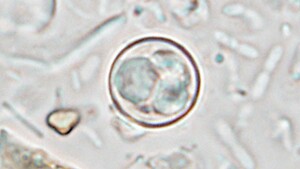
Cyclospora is an intestinal illness caused by a microscopic parasite. People typically become infected after consuming food or water contaminated with the parasite’s cysts. Symptoms often include diarrhea, loss of appetite, weight loss, stomach cramps, bloating, gas, nausea, and fatigue. Some individuals may experience vomiting, fever, and muscle aches. Symptoms may appear several days to a week or more after exposure and can last for weeks or even months if untreated.
The specific details regarding the source of the cyclospora infections in Missouri, beyond the general increase in cases, were not immediately available. Investigations into foodborne illnesses often involve detailed tracing of food supply chains, including growers, distributors, and retailers, to pinpoint contamination points.
Story summarized from the original created by Sarah Fentem on www.stlpr.org, see more information here.
Media gallery

